Iran Begins Massive Funeral for Slain Supreme Leader Amid Fragile U.S. Ceasefire
July 3, 2026
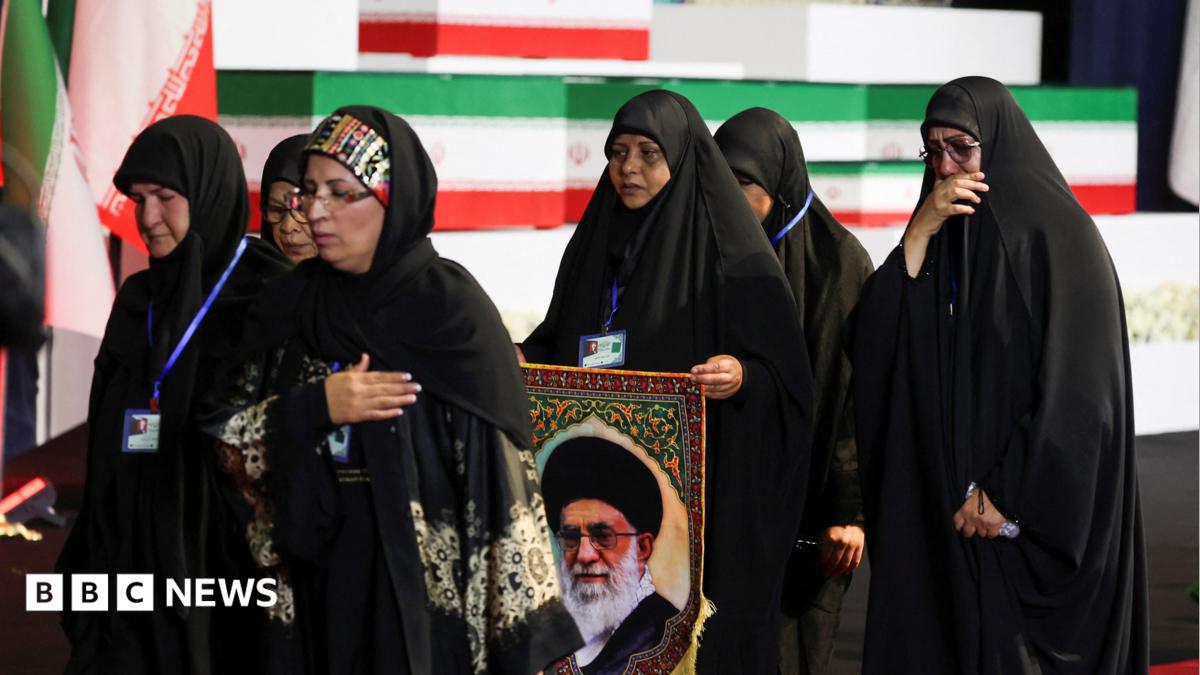
Iran launched a week-long funeral procession for former Supreme Leader Ali Khamenei, killed in February airstrikes, drawing millions of mourners and foreign dignitaries as peace talks with the U.S. remain on hold.
Across the spectrum
The majority of sources framed the event through a lens of diplomatic analysis and logistical observation, focusing on the funeral's role as a display of regime stability and its timing relative to peace talks. These outlets emphasized the choreographed nature of the ceremonies, the absence of Mojtaba Khamenei, and the strategic messaging of vengeance, often balancing these details with context on internal dissent or external diplomatic pauses. They collectively avoided strong moral judgments, instead presenting the event as a complex political spectacle with significant implications for regional negotiations.
Right-leaning coverage was markedly more critical of the regime, explicitly framing Khamenei’s legacy in a negative light and highlighting signs of insecurity within the leadership. Unlike the center group's focus on diplomatic nuance, this framing emphasized the absence of Mojtaba Khamenei as evidence of vulnerability rather than just a logistical detail. The editorial angle leaned towards exposing the regime's fragility and questioning the authenticity of its projected strength.
Full synthesis
Iran has commenced a multi-day funeral ceremony for former Supreme Leader Ayatollah Ali Khamenei, who was killed alongside family members in U.S.-Israeli airstrikes on February 28. The delayed funeral, initially scheduled for March, began with Khamenei’s body lying in state at Tehran’s Grand Mosalla. Officials expect up to 20 million mourners to participate in processions across Iran and neighboring Iraq before his burial in Mashhad on July 9. The event is framed by Iranian leaders as a display of national unity and defiance against Western powers, with security measures heightened amid regional heatwaves and ceasefire tensions. Notably, Khamenei’s son and successor, Mojtaba Khamenei, who was wounded in the same strike, has not appeared publicly since taking power.
The funeral coincides with a fragile 60-day ceasefire and ongoing negotiations between Iran and the United States, which have temporarily halted talks during the mourning period. Foreign dignitaries from over 100 countries, including leaders from Pakistan, Russia, and China, attended the initial ceremonies, though European nations supporting the U.S.-Israel campaign were excluded. While the Iranian government seeks to project resilience and legitimacy following months of conflict, the event underscores the deep political and social divisions within Iran, where recent protests and economic hardship persist beneath the state-sanctioned displays of grief.
Iran Begins Massive Funeral for Slain Supreme Leader Amid Fragile U.S. Ceasefire