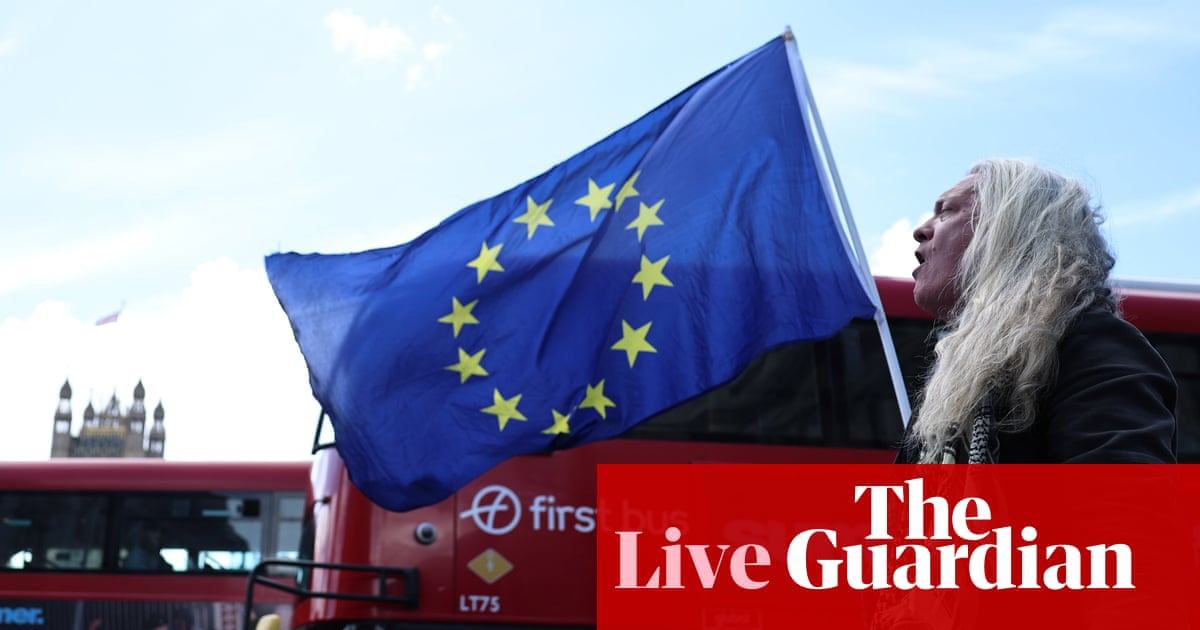
Britons Mark Brexit Anniversary Amid Political Turmoil and Economic Regret
June 23, 2026
A decade after the UK voted to leave the EU, polls indicate majority regret over Brexit as Prime Minister Keir Starmer resigns, marking the seventh leader in ten years and highlighting the referendum's lasting political and economic disruption.
Across the spectrum
This group frames Brexit as a catalyst for societal toxicity, emphasizing the normalization of racist rhetoric and the rise of far-right violence. It goes beyond economic metrics to highlight the erosion of democratic norms and social cohesion.
The center group predominantly focuses on polling data, economic impacts, and political instability, often balancing these with quotes from Brexit supporters or highlighting internal party conflicts. They tend to frame the event through a lens of systemic damage and unfulfilled promises, using local anecdotes or historical context to illustrate broader national despondence.
This perspective labels the decade as 'lost,' potentially critiquing the establishment's failure to effectively execute the referendum result. The coverage is sparse but aligns with a narrative of wasted time due to poor implementation rather than the decision itself.
Full synthesis
Marking the tenth anniversary of the Brexit referendum, public sentiment in the United Kingdom has shifted significantly, with recent surveys indicating a majority of Britons now view leaving the European Union as a mistake. A YouGov poll reveals that 57% believe the exit was wrong, a stark reversal from the 2016 vote, while economic analyses from the Bank of England and the Office for Budgetary Responsibility suggest the departure caused a 6% contraction in the economy. The political fallout remains severe; Labour Prime Minister Keir Starmer announced his resignation, becoming the seventh prime minister since the 2016 referendum. This rapid turnover underscores the persistent instability and division that have characterized British politics for a decade.
The legacy of Brexit extends beyond economics into deep societal polarization. While initial promises of sovereignty and controlled borders were central to the Leave campaign, net migration has surged, and trust in political institutions has plummeted. Critics argue that the referendum normalized exclusionary rhetoric and fueled far-right movements, leading to increased social tension and occasional violence. Despite growing calls for a return to EU membership among younger voters and some former supporters, the political will for another referendum remains low, leaving the country to navigate the long-term consequences of its decision without a clear path forward.
Britons Mark Brexit Anniversary Amid Political Turmoil and Economic Regret