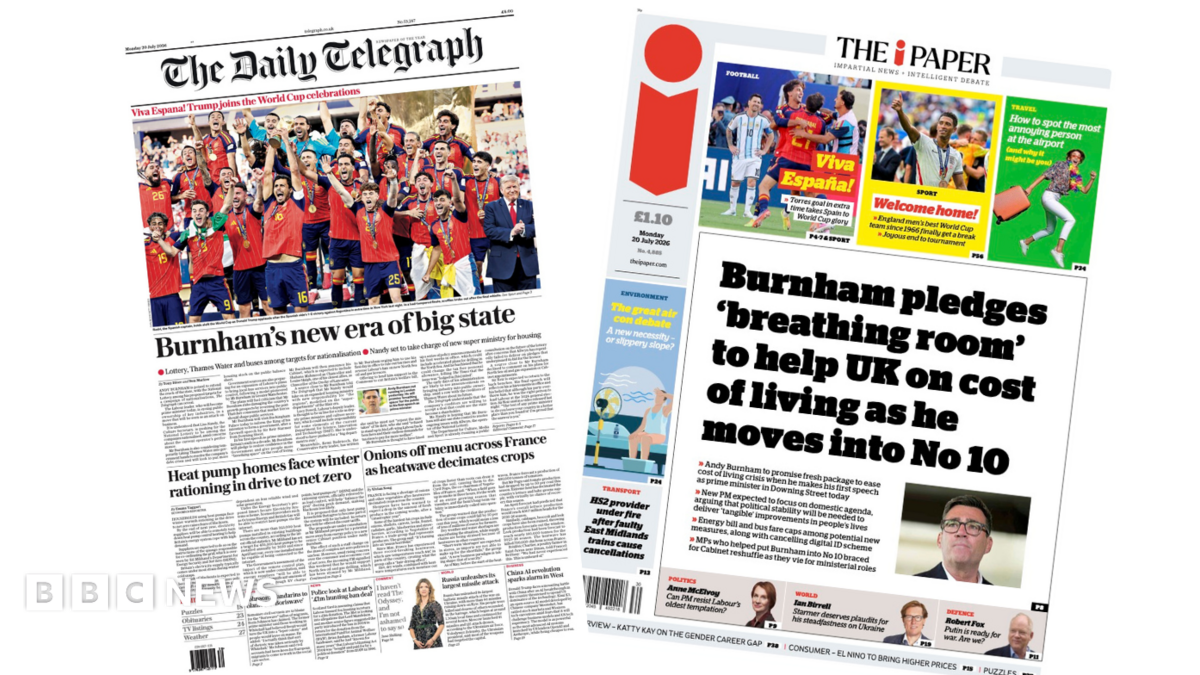
Spain Defeats Argentina 1-0 to Win 2026 World Cup Final Amidst Political Spectacle
July 19, 2026
Spain defeated Argentina 1-0 in extra time to win the 2026 FIFA World Cup, while President Trump's attendance and political maneuvering dominated the narrative surrounding the event in New Jersey.
Across the spectrum
This group critically examines the political undercurrents of the event, specifically contrasting progressive local inclusivity efforts with Trump's restrictive immigration policies. It emphasizes the social and cross-cultural dimensions of fan support, framing the tournament through a lens of social justice and political resistance rather than pure sports or national triumph.
Covering this perspective is a single source that frames the World Cup as a definitive success of American leadership and soft power. It highlights the unifying effect of the event on the nation and leverages quotes from Trump and FIFA officials to assert that the U.S. effectively hosted a historic occasion that reinforced national pride.
The majority of sources adopt a neutral or analytical stance, focusing on logistical details, economic impacts, and diplomatic dynamics rather than partisan political narratives. While some outlets like Time and France 24 offer broader reflections on legacy and commercialization, most stick to factual reporting on attendance, ticket prices, and international relations, presenting the event as a complex mix of athletic competition, economic activity, and global diplomacy.
Full synthesis
Spain claimed its second FIFA World Cup title by defeating Argentina 1-0 in extra time on July 19, 2026, at MetLife Stadium in East Rutherford, New Jersey. Ferran Torres scored the winning goal in the 106th minute, securing victory for a Spanish squad led by young talents like Lamine Yamal over Lionel Messi’s Argentine side, who had reached their second consecutive final. The match drew approximately 80,000 spectators, marking the culmination of a historic tournament that expanded to 48 teams and was hosted jointly by the United States, Canada, and Mexico.
The final was overshadowed by the prominent political presence of U.S. President Donald Trump, who attended alongside FIFA President Gianni Infantino, Mexican President Claudia Sheinbaum, and Canadian Prime Minister Mark Carney. Trump had previously drawn global criticism for intervening in a red-card controversy involving U.S. player Folarin Balogun, which UEFA deemed unjustifiable. Despite the political tensions and debates over ticket pricing, the tournament succeeded in drawing billions of viewers, with post-match celebrations erupting in New York City as Spanish fans celebrated their triumph.
Spain Defeats Argentina 1-0 to Win 2026 World Cup Final Amidst Political Spectacle