Spain Wins 2026 World Cup; Argentina Faces FIFA Discipline for Post-Match Brawl
July 19, 2026
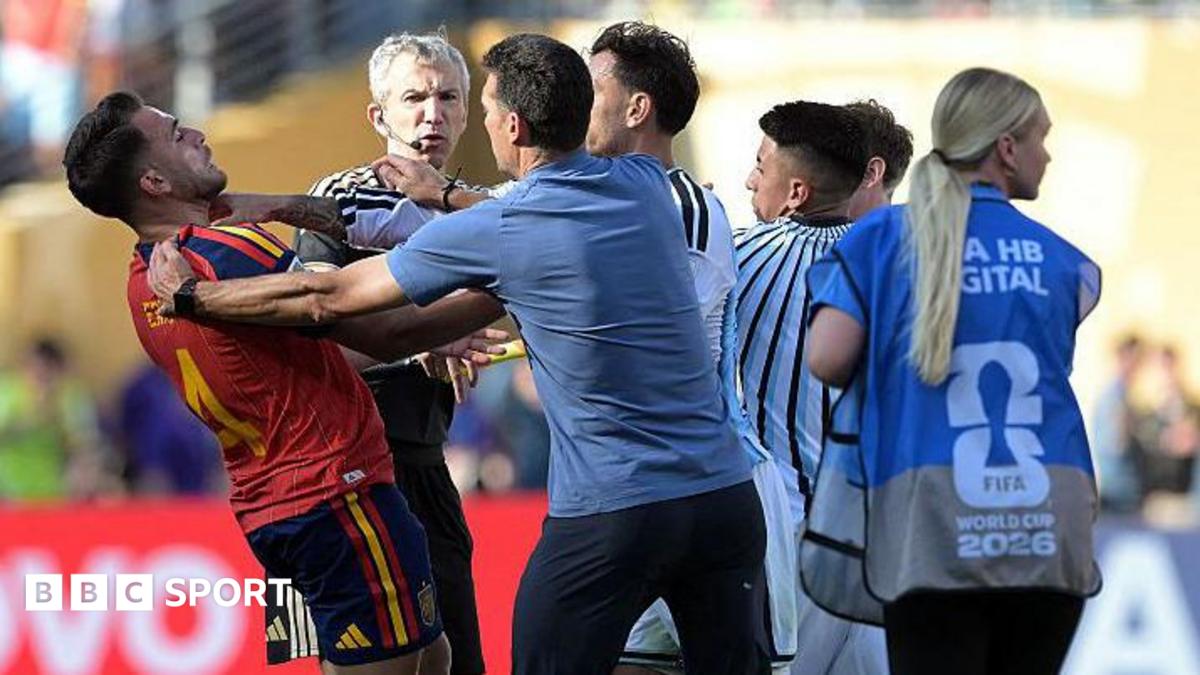
Spain reclaimed the top FIFA ranking after defeating Argentina, but the victory triggered a disciplinary probe into Argentine players and staff for post-match violence and a banner incident.
Across the spectrum
Left-leaning sources heavily politicized the event, framing Spain's victory as a moral stance against U.S. and Israeli policies while criticizing Trump's interventions. They emphasized social inequities such as high ticket prices and visa denials, contrasting the tournament's commercial success with its exclusionary practices and geopolitical controversies.
The vast majority of sources maintained a neutral, sports-focused perspective, prioritizing tactical analysis, match statistics, and player narratives like the transition from Messi to Yamal. Coverage of political incidents involving Trump or the post-match brawl was reported factually without overt editorial judgment, often balancing descriptions of the spectacle with standard journalistic objectivity.
Right-leaning outlets framed Trump’s presence as a successful highlight of U.S. hosting, often downplaying controversies or spinning player protests as political stunts. They emphasized criticism of Argentina’s sportsmanship, particularly focusing on the post-match brawl and player refusals to shake hands, while also celebrating conservative cultural elements like faith and national pride.
Full synthesis
Spain defeated Argentina 1-0 in extra time to win their second World Cup title, with Ferran Torres scoring the decisive goal. The victory returned Spain to the top of the FIFA men’s rankings, displacing Argentina to second place. However, the final was marred by a post-match altercation that has prompted a formal FIFA investigation. Argentine assistant coach Roberto Ayala appeared to strike Spanish midfielder Dani Olmo, while players Leandro Paredes and Nahuel Molina were involved in physical confrontations with Spanish teammates. FIFA disciplinary committees are reviewing these incidents under rules concerning violent conduct and bringing the sport into disrepute, with potential bans or fines for individuals and the Argentine Football Association.
The controversy compounds previous disciplinary issues for Argentina, including a separate investigation into a banner supporting territorial claims over the Falkland Islands displayed during the semi-final. While Spanish celebrations continued with the team’s return to Madrid, the focus shifted to the potential repercussions for Argentina. Critics, including BBC analysts, condemned the behavior as disgraceful, noting a pattern of poor sportsmanship from the Argentine side in recent major tournaments. Meanwhile, Spain’s tactical dominance was widely praised, cementing their status as the current global benchmark in men's football.
Spain Wins 2026 World Cup; Argentina Faces FIFA Discipline for Post-Match Brawl