Egypt-Argentina World Cup Controversy Sparks Political Debate and Cyber Attack Claims
July 7, 2026
Argentina's controversial 3-2 comeback win over Egypt at the World Cup triggered accusations of refereeing bias, political symbolism regarding Palestine, and a hack of the Argentine Football Association's email accounts.
Across the spectrum
This perspective contextualizes the sporting event as a direct referendum on the Palestinian struggle, linking refereeing decisions to broader geopolitical power imbalances. It explicitly criticizes the pro-Israel stance of political figures like Milei and Trump, framing the controversy through a lens of systemic injustice rather than isolated sporting disputes.
Center-framed sources prioritize factual neutrality and cultural significance, focusing on the Egyptian team's historic run and the emotional weight of their homecoming. They present competing narratives regarding the cyber attack and refereeing bias without taking a side, or simply document the visual spectacle of the celebrations and political symbolism as part of the fan experience.
This framing emphasizes the political agenda of NYC Mayor Zohran Mamdani, labeling him a 'socialist' to cast doubt on the legitimacy of his commentary and the match result. It highlights the 'controversy' of the officiating primarily to undermine the credibility of the critics and frame the event as a tool for partisan promotion.
Full synthesis
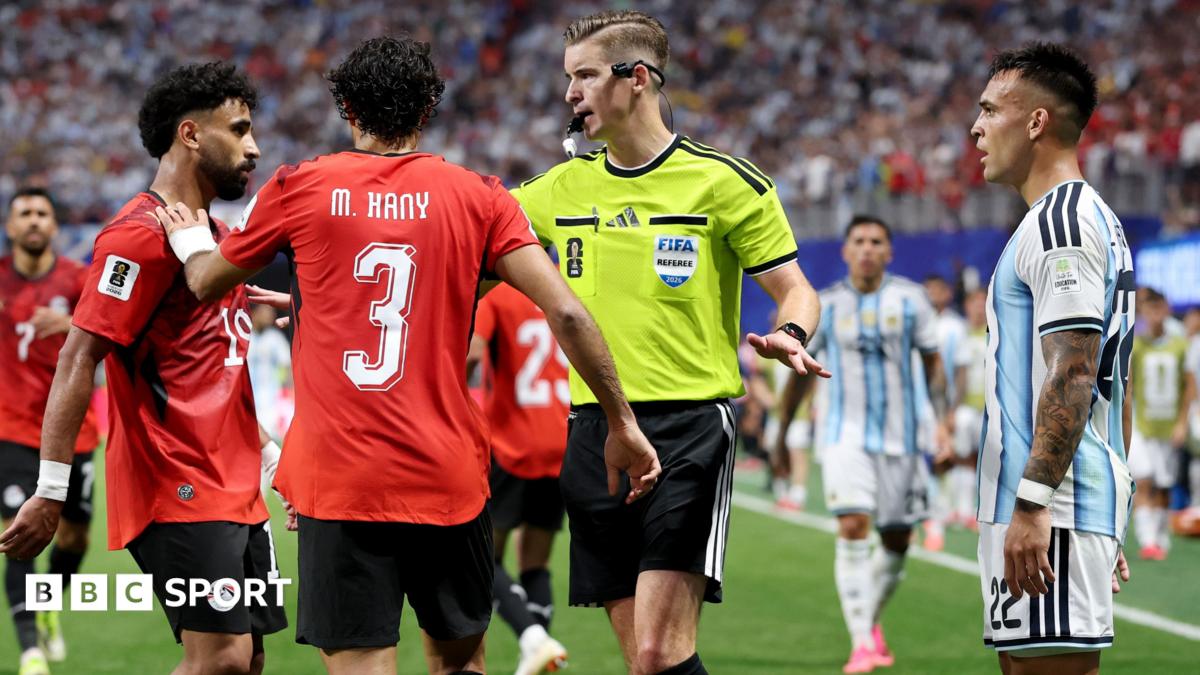
Argentina defeated Egypt 3-2 in a contentious Round of 16 FIFA World Cup match in Atlanta, overturning a 2-0 deficit in a victory marred by officiating disputes. Egyptian coach Hossam Hassan and the Egyptian Football Association alleged bias, citing disallowed goals and inconsistent VAR usage, and filed a formal complaint. The match quickly transcended sport, becoming a flashpoint for political tensions; Hassan dedicated previous victories to Palestine, while stadium fans traded Palestinian and Israeli flags. This symbolism intensified perceptions of bias among Arab supporters, who viewed the refereeing decisions through the lens of broader geopolitical injustices.
In the aftermath, the controversy expanded beyond the pitch. The Argentine Football Association (AFA) reported that its official email accounts were hacked, with unauthorized messages criticizing the refereeing and praising Egypt. Simultaneously, the Egyptian team returned home to a hero’s welcome, with fans displaying Palestinian solidarity. While FIFA and Argentine officials dismissed the bias claims as unfounded or attributed the email leaks to cyber attacks by Egyptian hackers, the incident has deepened suspicions about the intersection of political influence and global sports governance.
Egypt-Argentina World Cup Controversy Sparks Political Debate and Cyber Attack Claims